- Markets - Around The World
- Posts
- Tap to Prove You’re Alive - a New Viral App
Tap to Prove You’re Alive - a New Viral App
& Norway has gone full E.V. mode
Sile Me, myself, and I
A Chinese app called Sile Me (“Are You Dead?”) just became the country’s most-downloaded paid app on Apple’s App Store — despite doing almost nothing. Launched in mid-2025 for just 8 yuan ($1.15), it has a single button users must press daily to confirm they’re alive, or else the app alerts a pre-set emergency contact after two days of silence.
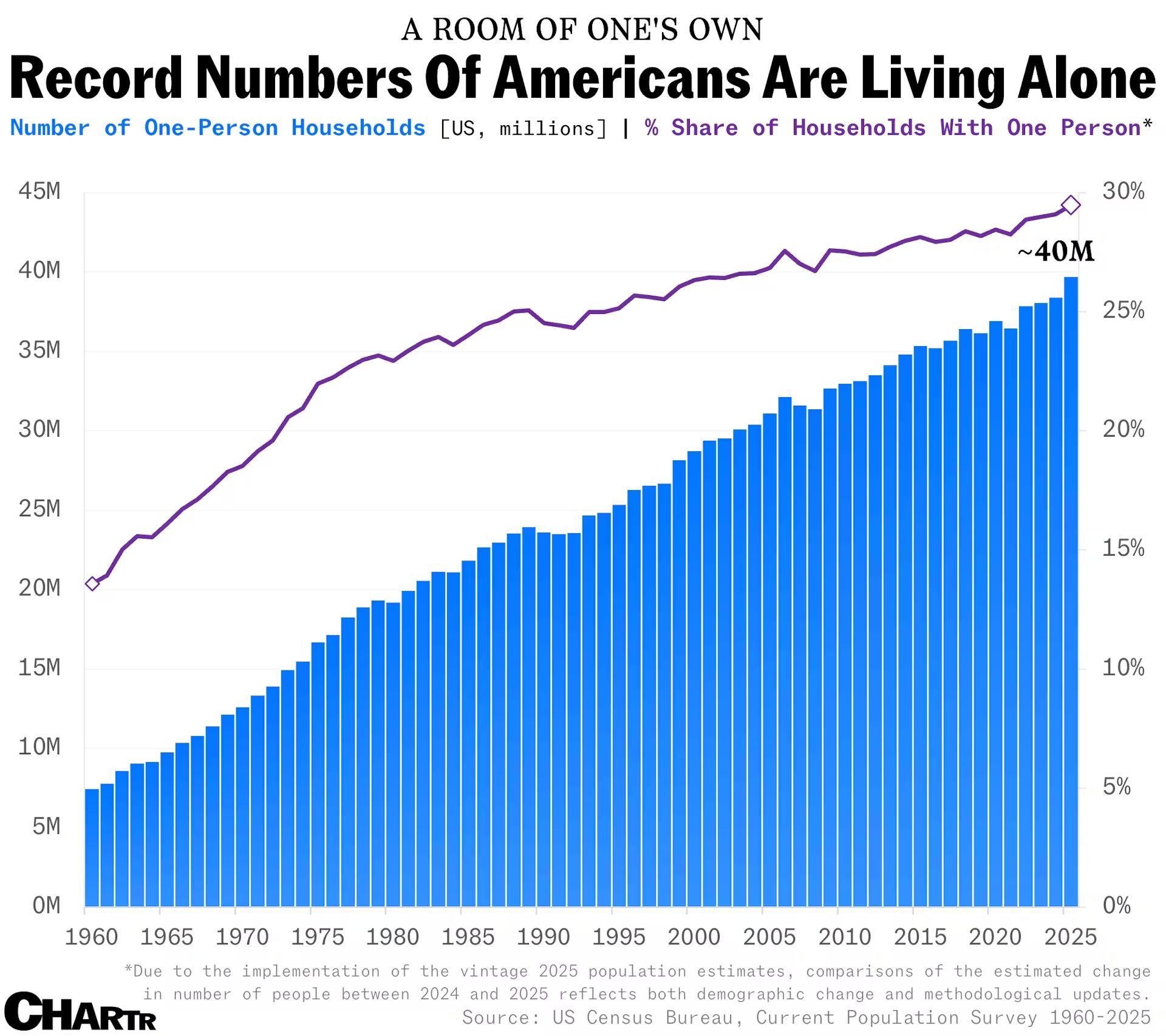
Today, over one-third of U.S. households are single-occupant homes, the highest share in decades as Millennials delay marriage, Gen Z prioritizes independence, and older adults age in place rather than move in with family. Demand for smaller living spaces, solo-focused services, and community-building tools is rising fast.

For brands and developers, that means opportunity: from apps that help combat loneliness to products designed for one-person kitchens, the “solo economy” is more than a cultural shift — it’s a market reshaper.
Search Is Dead. Long Live Conversational Checkout.
OpenAI is pulling retailers into the conversation: its search experience now integrates merchants like Walmart, letting users ask what to buy and get product-level answers inline. Shopping becomes intent-first — describe the problem, and AI assembles the cart.
Google is taking the opposite route, embedding AI agents directly inside retail workflows making AI shopping agents outward — empowering retailers like Kroger, Lowe’s and Papa John’s to build conversational agents across search and commerce touchpoints. Instead of buying through Google’s AI chat, users may still discover and transact on a brand’s own web properties, with AI enhancing product discovery and cart-completion along the way. If ChatGPT becomes a front door to Walmart orders, Google’s strategy could make every brand’s AI assistant the glue between search intent and checkout conversion — a fundamental divergence in how AI meets e-commerce.
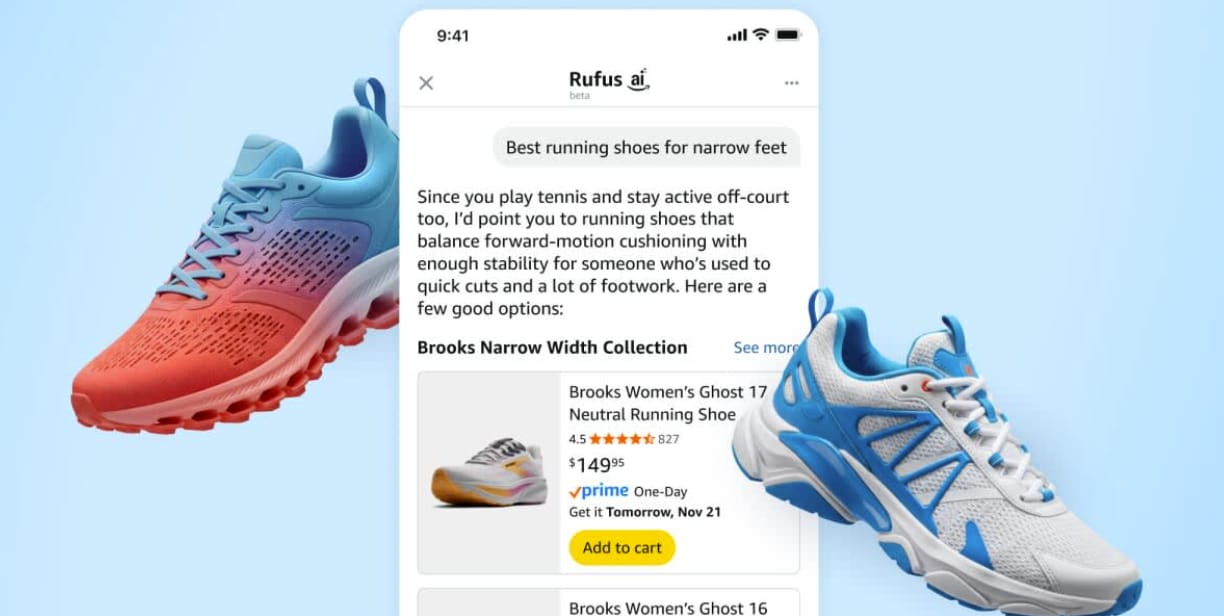
Agentic commerce isn’t theoretical anymore, Amazon’s Rufus AI shopping assistant is already moving real money. Users who engage with Rufus are ~60% more likely to purchase, and Amazon says it’s on track to drive $10B+ in incremental annualized sales, with ~250M users and 140% YoY growth in monthly interactions showing how fast conversational shopping is becoming habit, not novelty.
Almost Every New Car Sold in Norway Is Electric
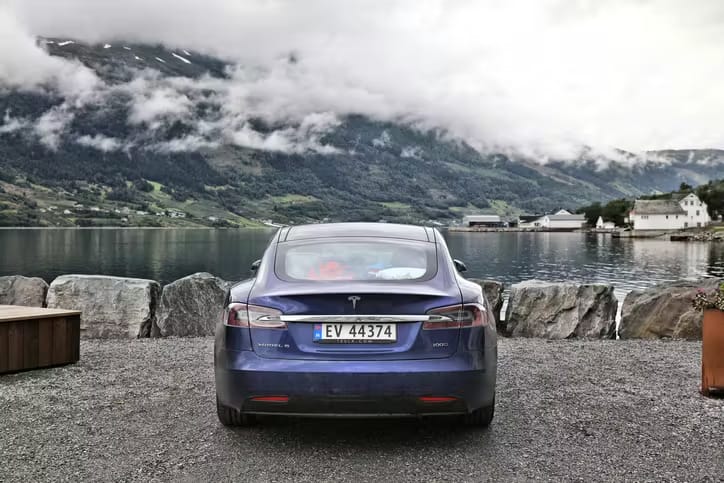
In 2024, nearly 100% of new cars sold in Norway were electric vehicles (EVs) — a world-leading adoption rate driven by strong incentives, taxes on fossil fuel cars, and a public charging network that rivals much larger countries. The shift didn’t just flip the market — it displaced nearly all new internal-combustion sales altogether.
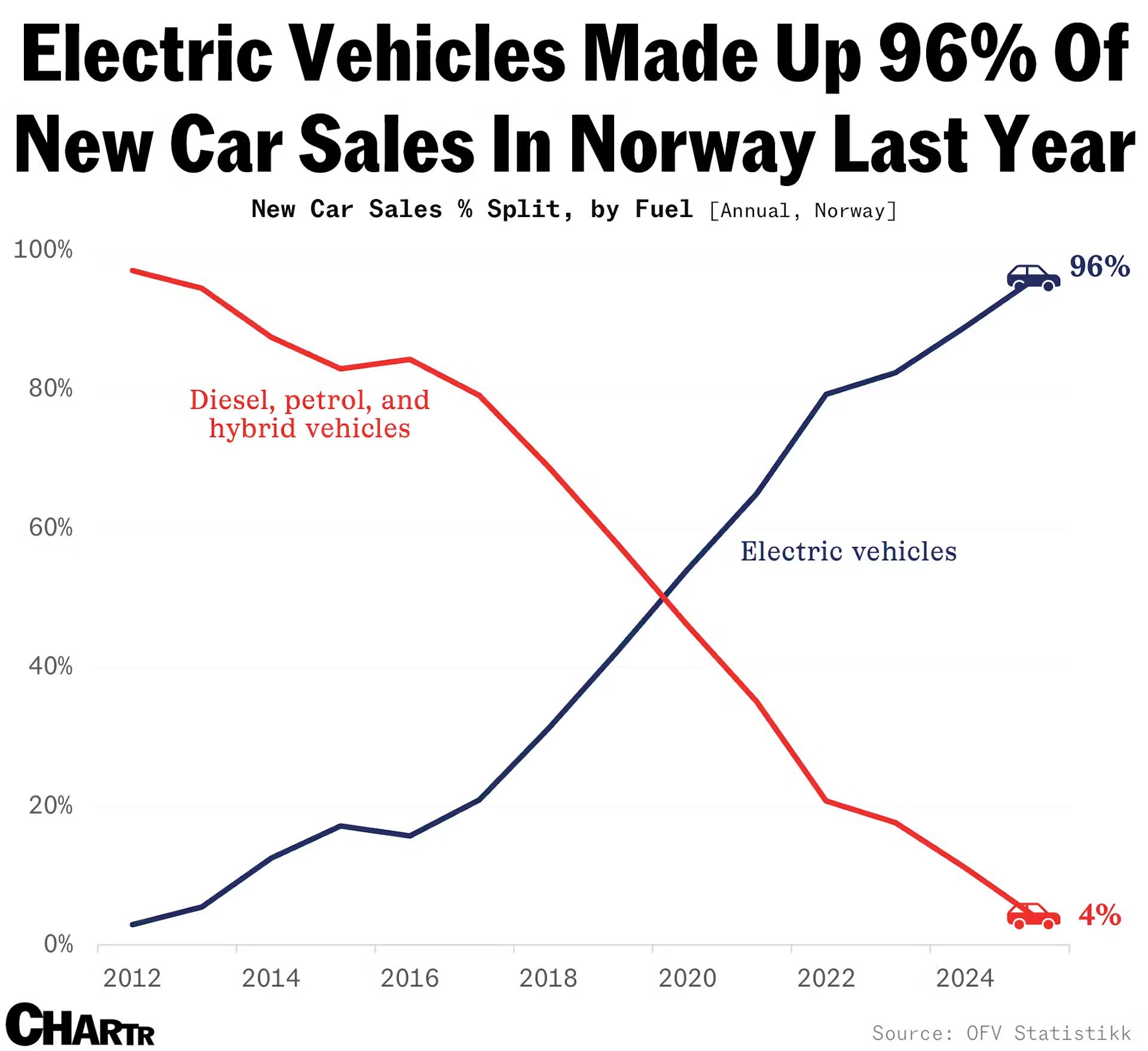
Norway’s EV dominance doesn’t come from toy cars or tax breaks alone: the country’s consumer rebates, exemptions from tolls and VAT on EV purchases, and nationwide fast charging have created a tipping point that other nations aspire to. Today, over 80% of the entire passenger fleet in Oslo is already electric.
What used to be a niche segment is now mainstream. For automakers and charging networks, Norway is now less a case study and more a preview of EV markets to come.